Revenue cycle
·
9 min read
Most clinics collect 82–88% of net collectible revenue and call it fine, because nothing shows them the gap. Here is where the other 8–15% goes, and how to get it back without seeing a single extra patient.
PS
The PatientStudio team
Practice operations
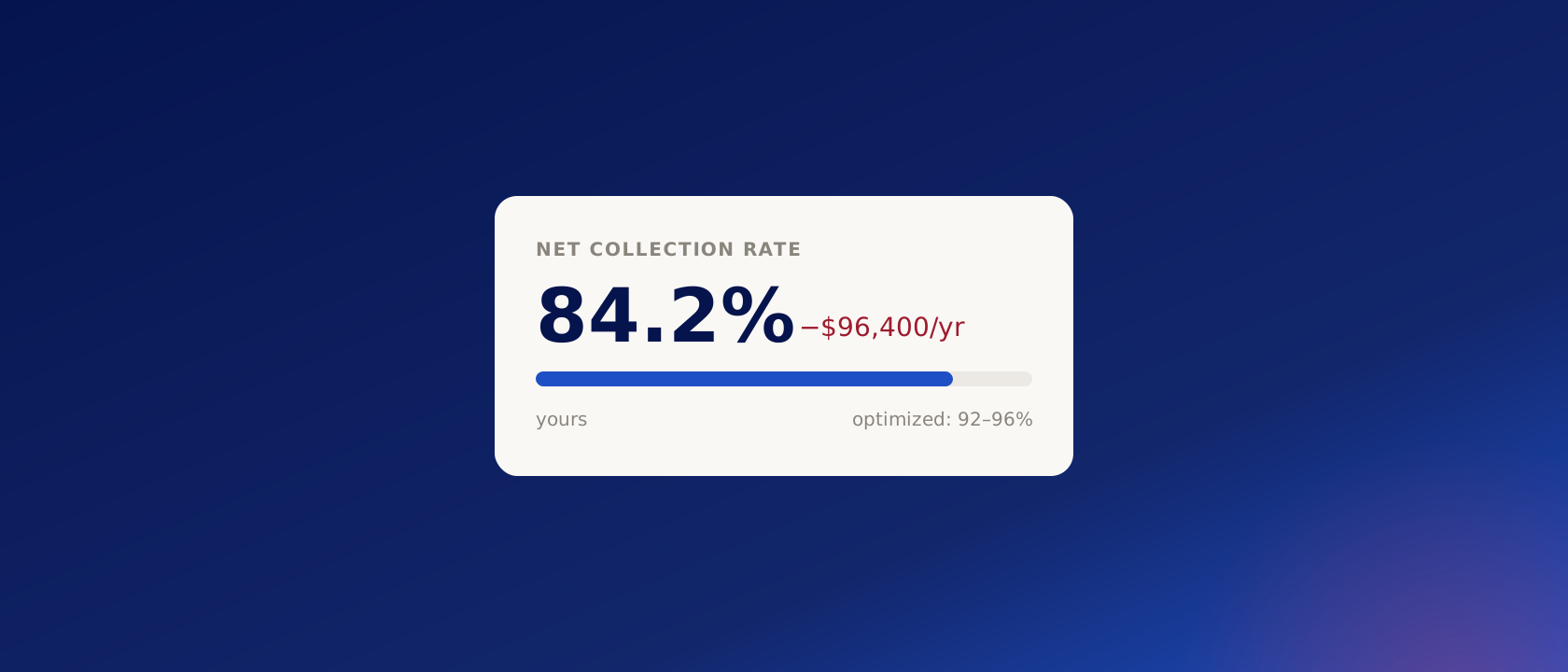
By most measures, your practice is doing fine. The schedule looks full, revenue arrives every month, and the biller says denials are “normal.” But underneath that surface, most outpatient rehab practices are quietly leaving 8–15% of collectible revenue on the table — money for care already delivered, already documented, already earned.
On a $1.2M practice, that gap is $48,000–$120,000 a year. Silently. Compounding. This article walks through where it goes and how to get it back.
Where the money actually goes
Revenue leakage is rarely one big hole. It is dozens of small leaks that never show up on a report — which is exactly why they persist. The three biggest:
Eligibility gaps at the front desk
A lapsed plan, a changed policy, a missed authorization requirement — most denials are created before the patient ever sits down. These write-offs get buried in month-end adjustments where nobody scrutinizes the pattern. Verifying every visit electronically, not just the first, removes this entire category of loss.
Denials worked too late
Denied claims not worked within 30 days have dramatically lower recovery rates. But billers work the loudest problems, not the highest-value ones, because the system gives them no prioritization. A denial that sits for six weeks is often a denial that quietly expires.
Patient balances that age out
Balances not collected in the first 30 days have a 60–70% lower collection probability. Front desks hate the money conversation; without automated cadences, the conversation simply doesn’t happen.
Why nobody notices
You know your revenue number. You almost certainly don’t know your potential revenue number — and the difference between the two is invisible on every standard report. Optimized practices collect 92–96% of net collectible revenue. Practices on legacy systems typically collect 82–88% and have no benchmark telling them otherwise.
The most expensive thing in your practice isn’t rent or payroll. It’s the revenue you already earned that your system is letting quietly expire.
Closing the gap without more patients
The fix is not working harder. It is removing the manual steps where leaks happen:
Verify before every visit
Automated eligibility checks run overnight against tomorrow’s schedule catch coverage problems days before check-in — one flagged plan change instead of one denied claim.
Let claims scrub themselves
Built-in scrubbing catches errors before submission, not after denial. Practices running clean-claim workflows see first-pass acceptance rates above 98% — and every avoided denial is rework that never lands on a human.
Automate the follow-up
ERAs that post themselves, denials corrected and resubmitted by an AI billing agent, patient balance cadences that run in the first 30 days — collection stops depending on someone remembering.
What recovery looks like
A conservative 6–12% improvement in net collection rate is typical when the front end and back end stop leaking. On a $1.2M practice, an 8% improvement is $96,000 in recovered revenue — no new patients, no new staff, no additional visits. That’s a hire. That’s a second location down payment. That’s the salary the owner deserves.
The leakage never feels urgent because the number never shows up anywhere. But it is the single highest-ROI problem most practices can fix — and the one they think about last.
Find out what your practice is leaving on the table
A 30-minute walkthrough of billing, verification, and the AI agents — on your numbers.